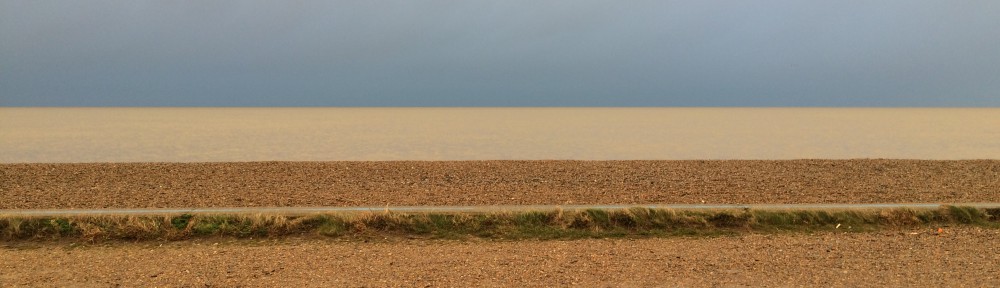
Jane began with a brief sketch of her background, explaining that she was new to these estuaries but had been won over after coming to live in the Aldeburgh area. She emphasized the fragility of the area in terms of erosion and flooding, particularly the recent salt water flooding of the Hazelwood Marshes and the overtopping in 2007 and 2013. Although flooding the marshes attracts new birds there is a need to control this and maintain sea defences where practicable.
Referring to maps of the estuaries Jane gave a brief history of Orford and Slaughden Quay. Orford was once a busy fishing port with a history of iron-age settlements and bronze-age barrows. Salt was extracted in Roman times and pottery has been found relating to this. Orford Castle, built by Henry II in the 12C, signifies the importance of the town in its day. Due to longshore drift the Ness has increased in size at the expense of Orford harbour. In due course the Ness was taken over by the Military and is still only partly accessible to the public. Slaughden Quay at Aldeburgh was once the most important area of the town with fishing boats and coastal traffic to London and back. There were fish houses, warehouses and coal yards and fishermen’s cottages. This has all been washed away now and the fishing industry is confined to a few boats on Aldeburgh beach.
Jane identified the ‘price of failure’ if flooding is not controlled today:
• The pollution of underground water supplies so essential to farming
• Destruction of protected marsh habitats
• Increased speed of the tides affecting fishing and boating
• Destruction of homes.
Jane went on to discuss the Government bodies involved in efforts to control flooding today. These include: Suffolk Coastal District Council, the National Trust, RSPB and the Internal Drainage Board, which imposes a tax on landowners. She mentioned that the International Levee Handboook describes the gold standard in river bank construction. She then focused on the Alde and Ore Planning Partnership Plan. The Partnership is made up of local interested parties and is consulted by statutory agencies. The Alde and Ore Estuary is divided into flood cells for management purposes. The Partnership identifies upgrading priorities, and monitors the estuaries. In turn it liaises with the Environment Agency and the Internal Drainage Board.
Apart from conservation of the sea and river banks, she gave two possible alternatives for managing the estuary which, although radical, are under consideration:
- Re-wilding -map of the possible change was shown
- Shingle Engines – which involves dumping large quantities of shingle just off the beach south of the Martello tower. This would stop coastal erosion for up to 50 years but would be expensive and the environmental effects are difficult to predict. Chief Scientist Mike Cowling outlines the issues in this paper: http://www.SlaughdenSinglesEngineSuffolkCFFeb2016.pdf
Everyone found this talk interesting and joined in the discussion at the end offering suggestions, possibilities and examples of flood management around the country. (Summary: Rebecca Crowley)
 W I S E Aldeburgh